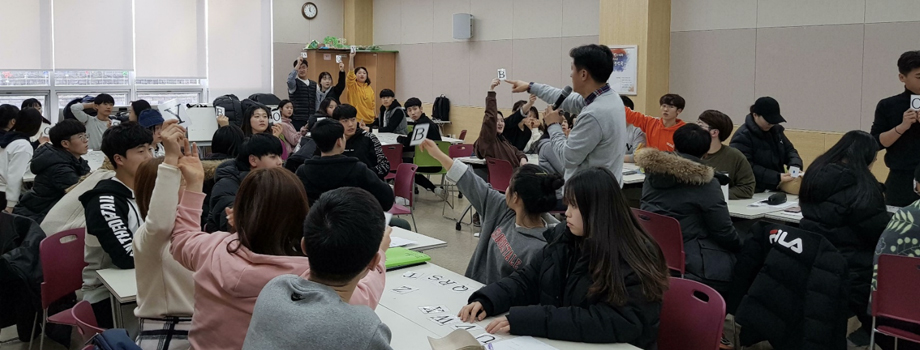
North Korean defector youth often face lower basic academic skills compared to their South Korean peers due to differences in the education systems of the North and South, as well as learning gaps that occur during the escape process. As a result, many are placed in lower grades than their age would typically require once they enter South Korean schools. Combined with language and cultural differences and struggles with self-identity, these challenges make integration into school and society particularly difficult.
Recognizing the urgent need to support defector youth, NKHR has been operating education and resettlement support programs for them since 1999. These programs are designed to strengthen academic achievement, boost self-confidence, and develop career pathways and leadership skills. The curriculum includes subject-based classes, presentation training, civic education, career guidance (such as job experience and university visits), and leadership education.
In addition, NKHR provides scholarships and financial assistance to help defector youth and university students focus on their studies. To further broaden opportunities, we also collaborate with private and academic institutions to offer overseas internship placements
- U-Bridge Program
-
Since 2005, NKHR has operated a leadership program for North Korean defector university students to cultivate future leaders with international awareness, leadership skills, and a spirit of service. This program aims to train professionals who understand both North and South Korea, preparing them to meet the growing demand for expertise in politics, economics, industry, and welfare in anticipation of reunification.
From 2013 to 2015, the Leadership Camp was co-hosted by NKHR and the Korean American Sharing Movement (KASM) in the United States. During the camp, defector university students visited international organizations, government bodies, and NGOs in Washington, D.C. and New York. They also attended lectures, discussions, and workshops with experts and leaders in global politics and economics, gaining valuable experiences to broaden their international perspectives and nurture the next generation of unification leaders.
In 2017, the program was renewed as the U-Bridge Program. U-Bridge stands for “You are the Bridge of Unification,” symbolizing the role of youth in bridging the two Koreas in preparation for reunification. Through field studies in European countries, participants explore diverse perspectives on the social, economic, and political transitions that may occur in a post-unification Korean Peninsula. They also study transitional justice processes that accompany the transformation from socialism to democracy, drawing lessons for the future of a unified Korea.
- Programs at Hana Center (Settlement Support Facility for Defectors)
-
The Settlement Support Center for North Korean Refugees (commonly known as Hanawon) is a government-affiliated institution under the Ministry of Unification that supports the social resettlement of North Korean defectors. Before entering South Korean society, defectors receive a 12-week education program at Hanawon.
Since 1999, NKHR has conducted a Saturday visitation program at Hanawon for defector children and youth. Every Saturday, we provide academic support in Korean, mathematics, and English, as well as special activities such as physical education, art, science experiments, and civic education.
- I, You, We” Humanities Community
-
This program is student-led, held once a month in the form of book discussions, humanities excursions, and historical field trips. Students take the lead in planning and managing each month’s activities, fostering communication skills, inclusiveness, and a broad perspective to cultivate future professionals prepared for reunification.
Since 2014, both South and North Korean university students have participated together, creating a small but meaningful space for reunification through mutual understanding and dialogue. The program offers participants the experience of building a successful joint community, while also enhancing communication and critical thinking skills, and nurturing future innovators through humanities-based convergence education.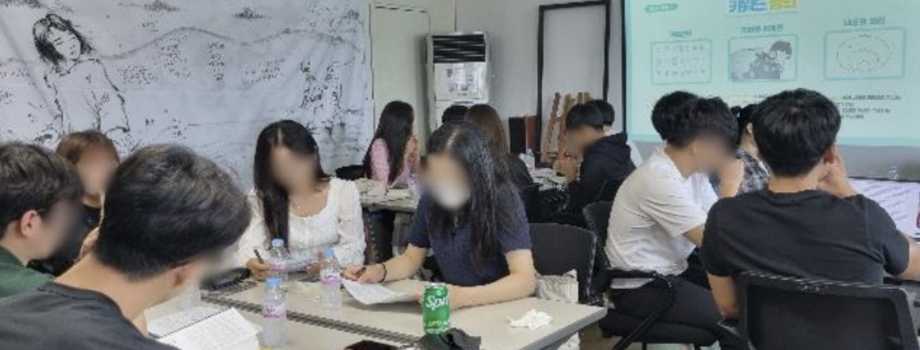
- One-on-One Academic Mentoring
-
The One-on-One Learning Mentoring Program, otherwise known as the ‘Firefly Mentoring’ program, is designed to strengthen the basic academic skills of North Korean defector youth by pairing them with South Korean university and graduate students for one-on-one study sessions.
Launched in 1999 as a home-visit tutoring initiative, the program has continued steadily to this day. Its value lies not only in academic support, but also in breaking down the barriers between North and South Korean students, allowing them to meet as individuals and grow together.
Through this program, defector youth mentees receive academic assistance and career guidance, while university student mentors gain transformative experiences and new perspectives through their relationships with the mentees.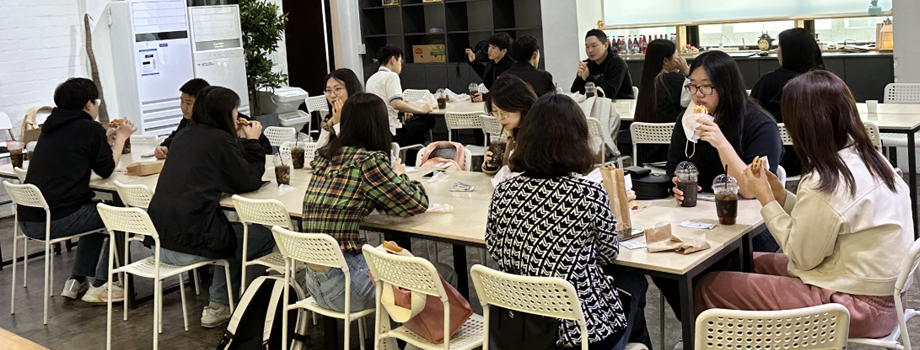 Mentor orientation
- Career and College Preparation Program
-
The Career and College Preparation Program supports North Korean defector youth in pursuing meaningful and promising careers so that they may live as active members of a free and modern society. In North Korea, career paths are often determined by government assignment rather than individual choice. Furthermore, due to the very different job markets in the North and South, many defector youth face difficulties in planning their futures and making decisions about higher education because of limited access to information.
To address these challenges, the program provides career and academic guidance through information sessions, aptitude tests, job experience opportunities, university visits, and one-on-one counseling. Through these activities, students are encouraged to develop healthy values about career choice and design future pathways that match their skills and aspirations.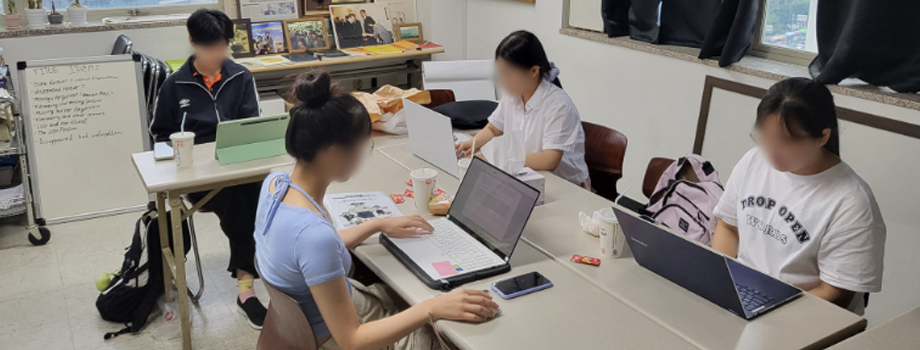 대학입시 특강 자료 정리 중인 학생들
- Scholarship Program
-
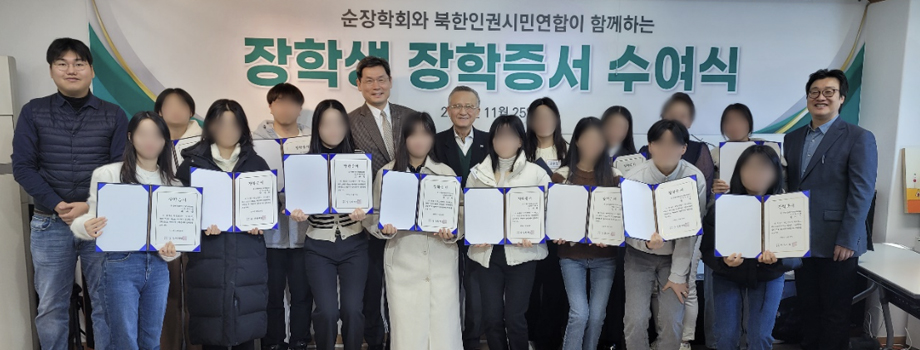
Our Scholarship Support Program provides financial assistance to North Korean defector students and youth born in third countries who are at risk of giving up their studies or career aspirations due to economic hardship. The program offers both internal and special scholarships, as well as opportunities linked through partnerships with external organizations.
- Future Insights Lecture Series
-
The program invites experts from various fields to deliver special lectures for North Korean defector youth and adults. These lectures are designed to support their stable resettlement in South Korean society, foster an understanding of liberal democracy, and strengthen their capacity as democratic citizens.
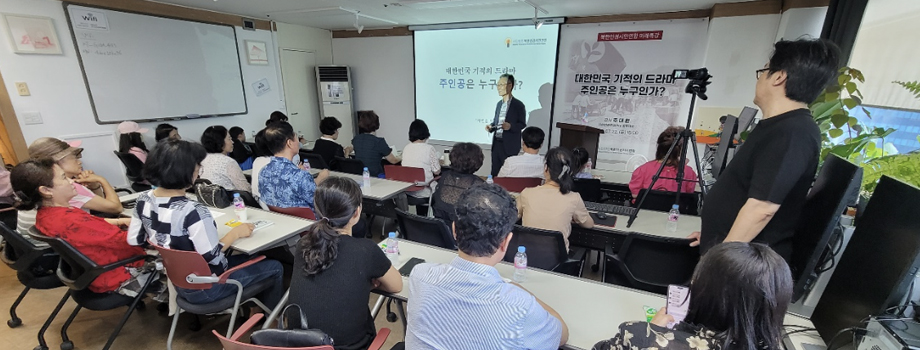 특강: 주대환 사회민주주의 연대 공동대표
- Project SPEAK: Youth and Civic Engagement for Human Rights
-
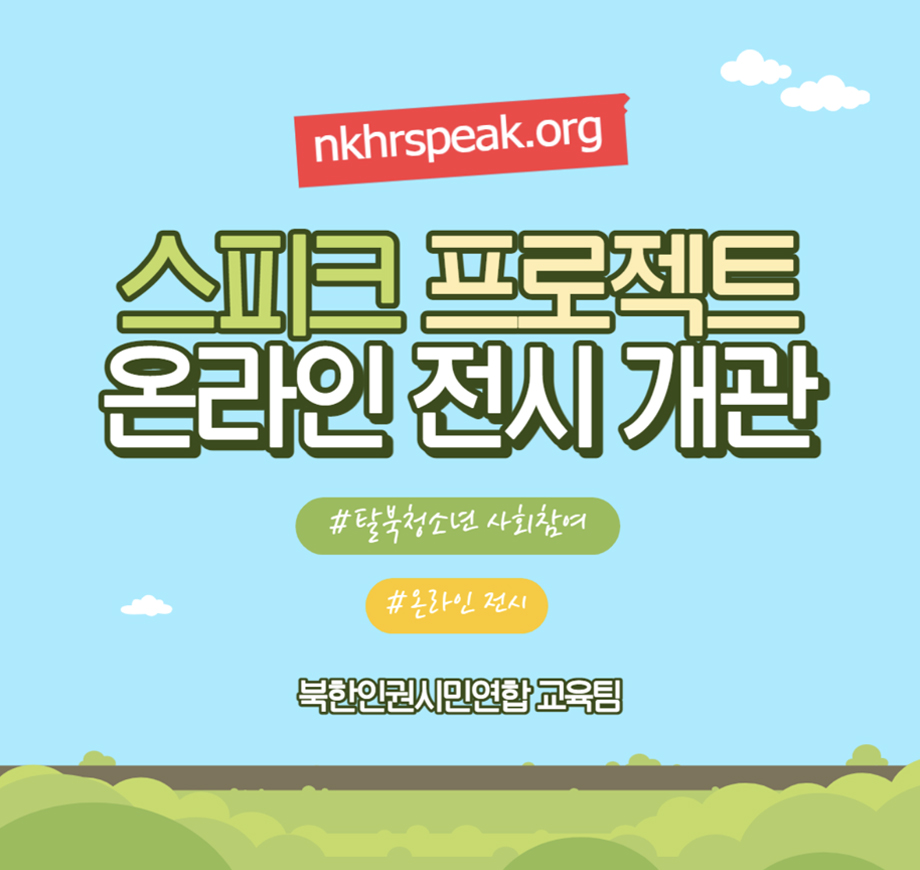
The SPEAK Project—an acronym for ‘Grow and Bloom on Your Own’ and also meaning ‘to speak’—aims to strengthen the democratic citizenship capacity of North Korean defector youth through civic engagement activities. The project also seeks to deepen their understanding of society by exploring social issues, while fostering networks among youth and young adults.
- Hankyoreh Seasonal Education Program
-
The Hankyoreh Seasonal School is a three-week residential program designed to improve the academic performance and confidence of North Korean defector youth. The program includes classes in Korean, English, mathematics, public speaking, civic education, history, and unification studies. Core subjects are taught at different levels to strengthen the basics, while special lectures and self-study sessions help participants make up for gaps and enhance their academic abilities. Civic education and presentation training also enable students to articulate their thoughts persuasively and grow as democratic citizens.
From 2001 to 2012, the program was held twice a year during the summer and winter school breaks. Since 2013, it has been conducted every January. Although temporarily suspended after the COVID-19 outbreak in 2020, the program is expected to resume soon. In recent years, a growing number of former participants have returned as volunteers after entering university, serving as role models for younger students.