-
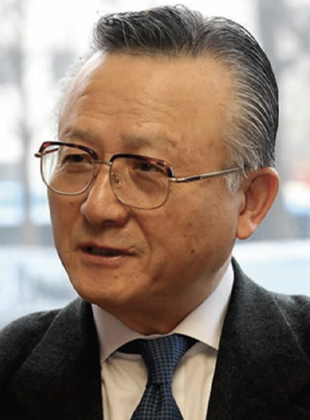
Suk-Woo Kim, Chairman of the Board, Citizens’ Alliance for North Korean Human Rights (NKHR)
-
With pride in being a model of a genuine civic organization—the very foundation of democracy—we will continue to move forward with steady determination.
As North Korea suffered mass starvation in the 1990s, countless residents fled in search of survival. NKHR listened to their testimonies and documented the reality of political prison camps, the widespread abuse of women, and other atrocities in systematic reports that were delivered to the United Nations and the international community. Since 1999, the international conferences on North Korean human rights and refugee issues that we have organized have served as a catalyst, drawing the attention of human rights advocates around the world. Our conviction that North Korean human rights issues must be addressed in cooperation with the global community has only grown stronger.
Former Unification Minister Kwon O-ki, upon establishing the Office of Humanitarian Assistance, emphasized that civil society has a crucial role to play in improving North Korean human rights. He further noted that if Korea were to have 20,000 healthy civic organizations, democracy would be complete. This vision highlights the role of genuine, independent civic groups—not GONGOs (Governmental Non-Governmental Organizations) reliant on government support. Encouragingly, the number of such groups in Korea continues to grow.
When united by a spirit of sincere service, the social impact of our work is multiplied. Building on the warm support and encouragement of our donors, NKHR activists continue their dedicated efforts. With pride in being a true civic organization—the foundation of democracy—we will continue to move forward quietly but resolutely.
The Beginning of NKHR
-
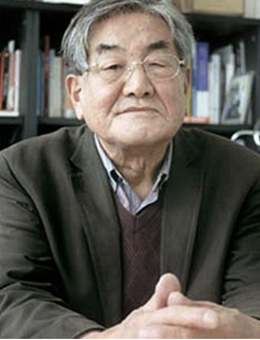
Yoon Hyun, the founder of the NKHR
-
Yoon Hyun, the founder of the Citizens’ Alliance for North Korean Human Rights (NKHR), was also the founder of Amnesty International Korea. Throughout the 1970s and 1980s, under military dictatorship, he worked tirelessly to defend human rights and democracy in South Korea.
At that time, we were so deeply absorbed in our own domestic struggles that we had little opportunity to reflect on the situation in North Korea. However, as we began to witness victims who had escaped from North Korean political prison camps arriving in South Korea in the 1990s, we were confronted with a profound question: “What meaning does unification hold if it does not guarantee human rights and civil liberties? When unification comes, and the 200,000 political prisoners and their families ask us, ‘What did you do while we were dying?’—what will we be able to answer?”
When NKHR was first founded, we walked a lonely path, unheard and unnoticed. Yet gradually, the North Korean human rights movement began to grow both in Korea and abroad. Under the rallying cry, “Let human rights shine on North Korea,” we came together as one. Our logo, the image of a candlelight, symbolizes this spirit. It draws inspiration from Amnesty International’s famous motto, “It is better to light a candle than to curse the darkness,” as well as from our own history of advancing the Amnesty movement in Korea.